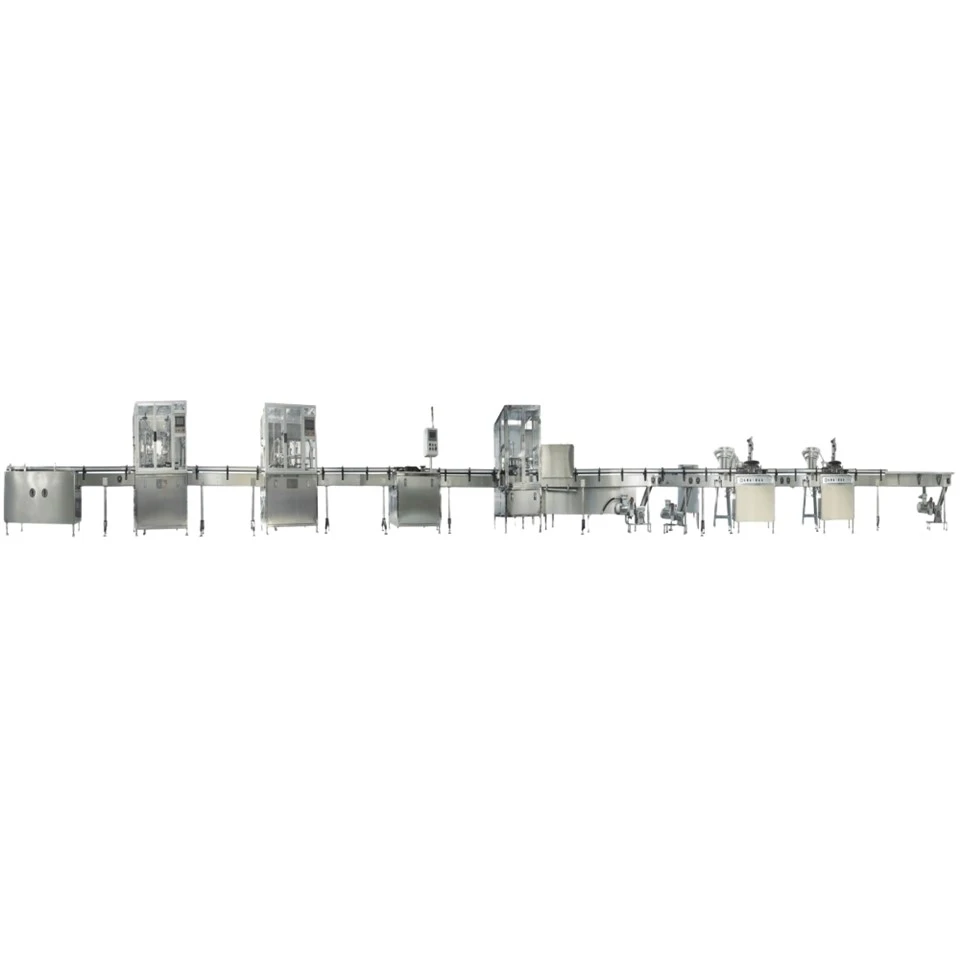
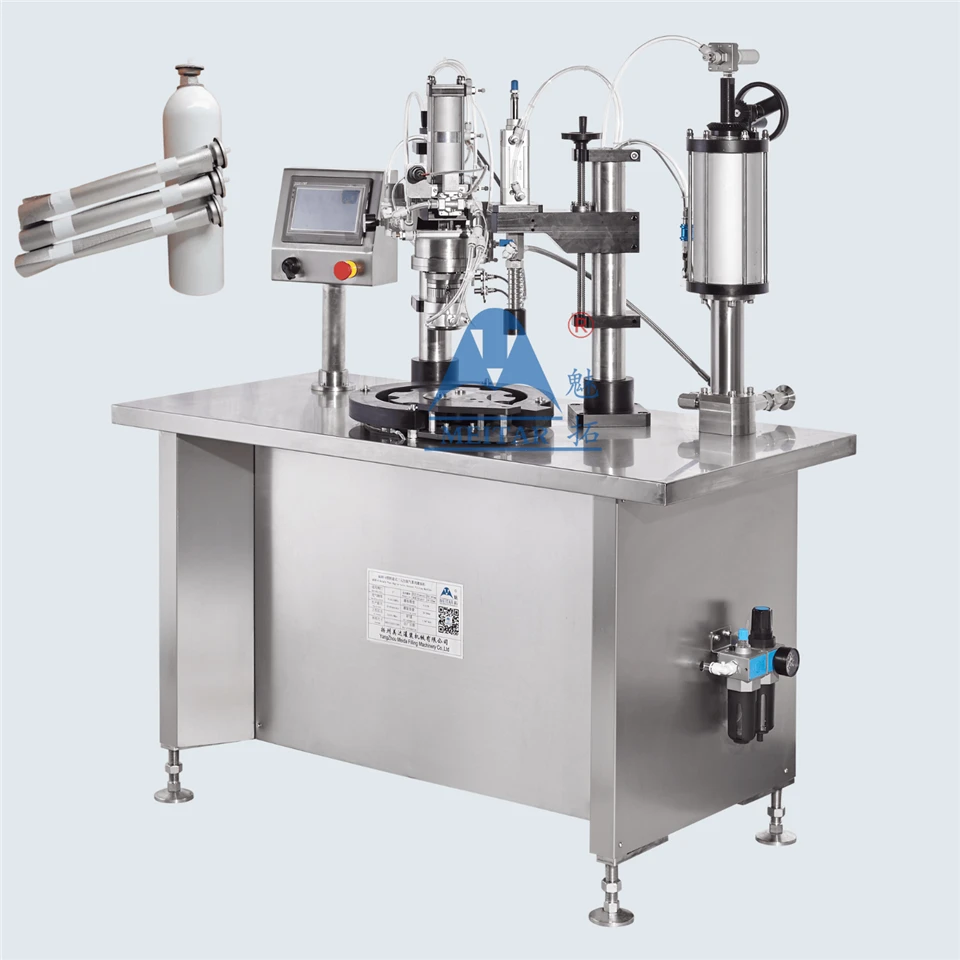
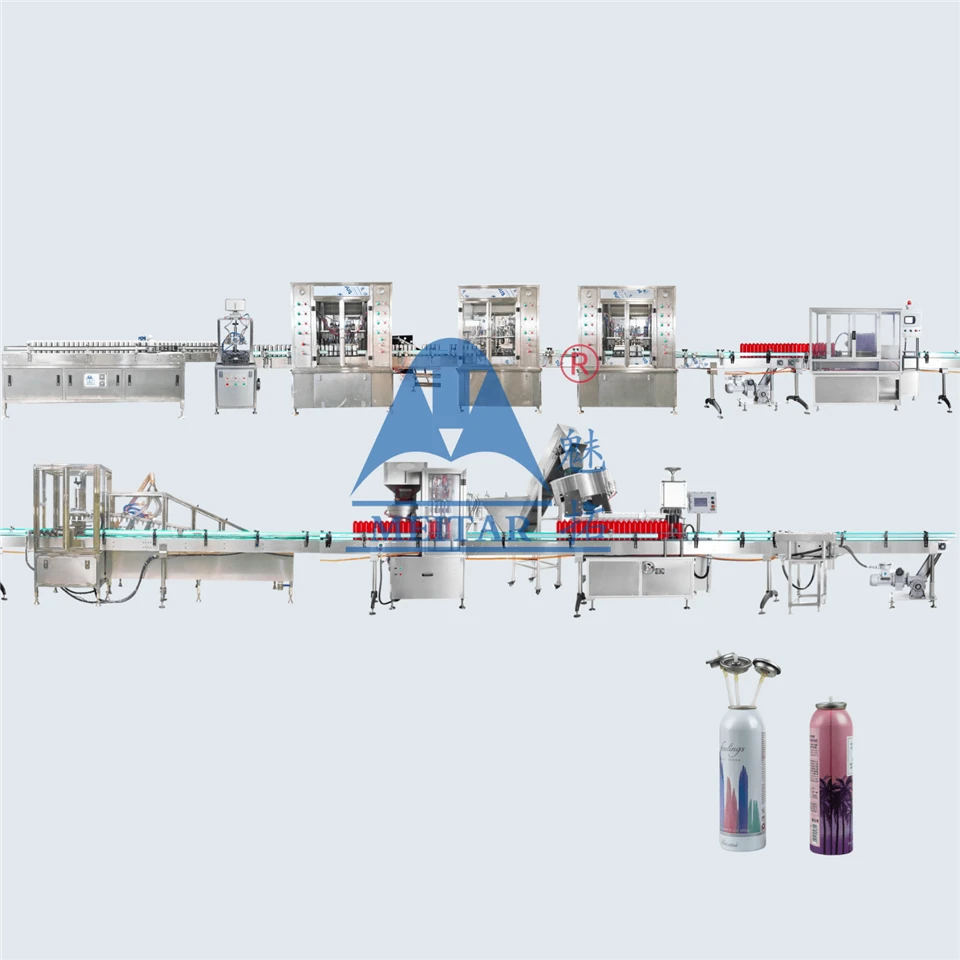
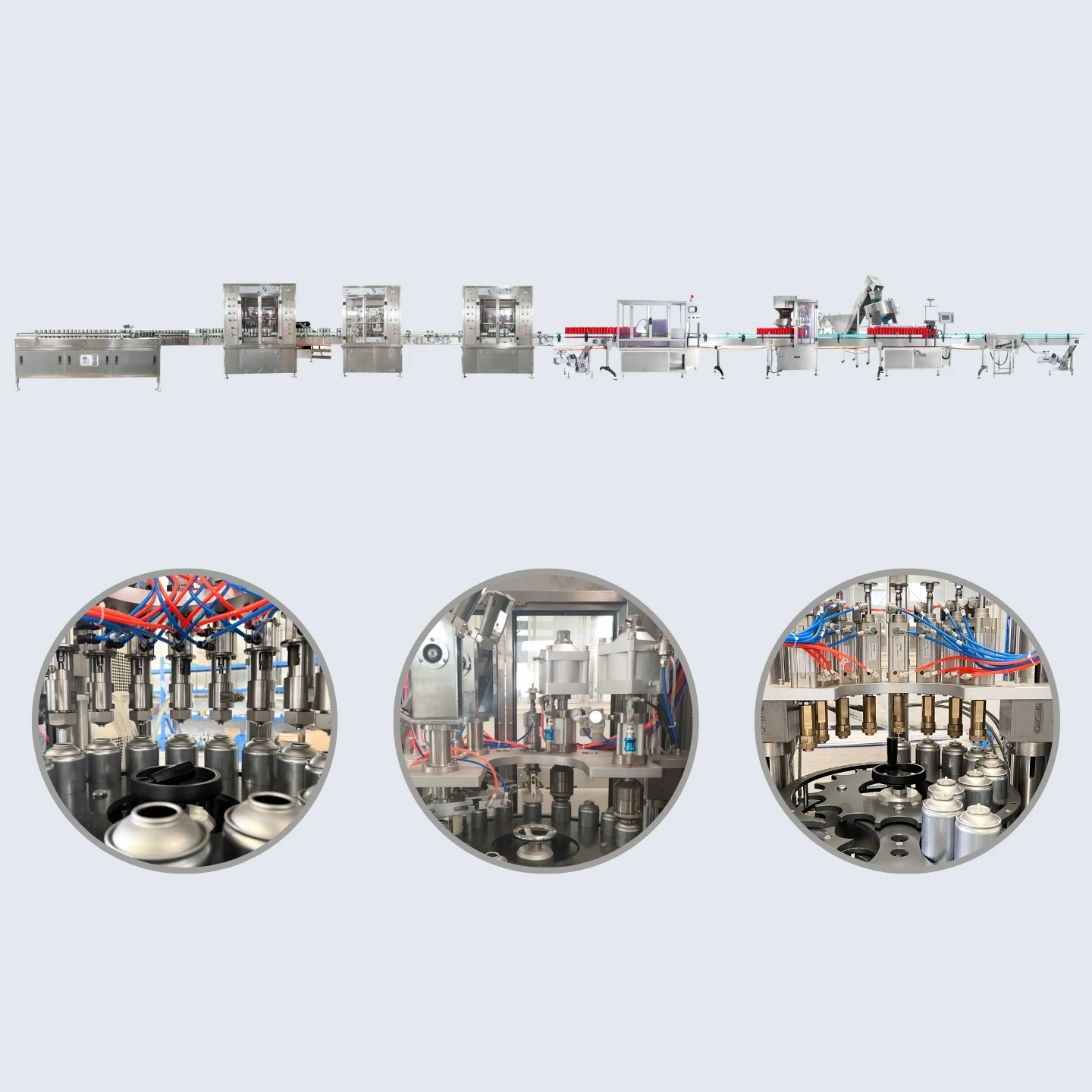
This Bag-on-Valve filling line suits operations filling fluids or viscous products that can pass through the valve stem. It is a line configuration rather than a capping-only machine: the published sequence moves from empty-can feeding to automatic BOV filling and two-head sealing/gas filling, then lists a checkweigher, water-bath leak detector, actuator placer, cap press and packing table. Those downstream devices are inspection, finishing and packing stages, not additional liquid-filling heads.
Potential application category
Personal care
Potential application category
Household
Potential application category
Pharmaceutical
Potential application category
Food & beverage
Compare a related configuration
As a configuration alternative, the QGBE-A BOV Aerosol Filling Machine is described as a rotary semi-automatic unit that combines propellant gassing, valve crimping and liquid filling in one compact unit, with a published capacity of 15–20 containers per minute. This product instead is described as a multi-section BOV line with upstream handling and downstream inspection/finishing equipment. The manufacturer sources do not set out a next-model hierarchy or establish performance superiority.
The Bag-on-Valve Aerosol Filling Line comprises two main sections.
Technical configuration
Manufacturer-published valuesProject scope agreed on enquiryMissing fields clearly identified
Published fields are retained from the imported manufacturer reference. Confirm the final configuration before order.
Container compatibility
Specification status
Technical detail can be confirmed on enquiry.
BOV valve / bag compatibility
Specification status
Technical detail can be confirmed on enquiry.
Utilities
Gas pressure
0.45~0.8MPa
Max. Gas consumption
1.5m³/min
Gas pressure
0.6~0.8MPa
Dimensions & weight
Specification status
Technical detail can be confirmed on enquiry.
Automation level
Published automation wording
Automatic
Published specification reference
Imported source values are shown below without estimating missing specifications.
Sealing diameter
26.5~28.0mm
Sealing depth
4.7~5.5mm
Gas filling accuracy
≤±1%
Gas pressure
0.45~0.8MPa
Capacity
25~30CPM
Diameter of cans
≥35mm
Liquid filling accuracy
≤±1%
Liquid filling capacity
25~30CPM
Max. Gas consumption
1.5m³/min
Gas pressure
0.6~0.8MPa
Liquid filling volume
30~750ml
Production capability
Manufacturer-listed capacity is 25–30 CPM; the table also repeats 25–30 CPM as “Liquid filling capacity.” This is published as a range, not a typical or guaranteed result. The manufacturer information does not state whether the capacity figure applies to the whole line or a specific filling stage, so that scope needs confirmation for the intended configuration.
Capacity
25~30CPM
Max. Gas consumption
1.5m³/min
Optional configurations
Configuration options are confirmed for the selected product and operating requirements.
Specification status
Technical detail can be confirmed on enquiry.
Support
Support requirements can be discussed as part of the equipment project. Scope and availability are confirmed on enquiry.
Installation & commissioning
Project support
Installation and commissioning requirements can be reviewed during project scoping. Any coordination, site readiness, integration, travel and acceptance requirements are agreed for the selected project.
Operator training
Project support
Operator and technical-personnel training requirements can be discussed in relation to the agreed equipment configuration and operating requirements. Scope, delivery method and timing are confirmed for the selected project.
After-sales support
Local engineering support
Servicing, troubleshooting, preventative maintenance and spare-parts requirements can be discussed for the selected equipment. Availability, response timing and parts holdings are confirmed for each project; they are not represented as guaranteed stock.